How to Stop Yelling at Your Kids
Address: https://howtostopyellingatyourkids.com/
Site: How to Stop Yelling at Your Kids
Updated: 2026-11-19
A Field Guide
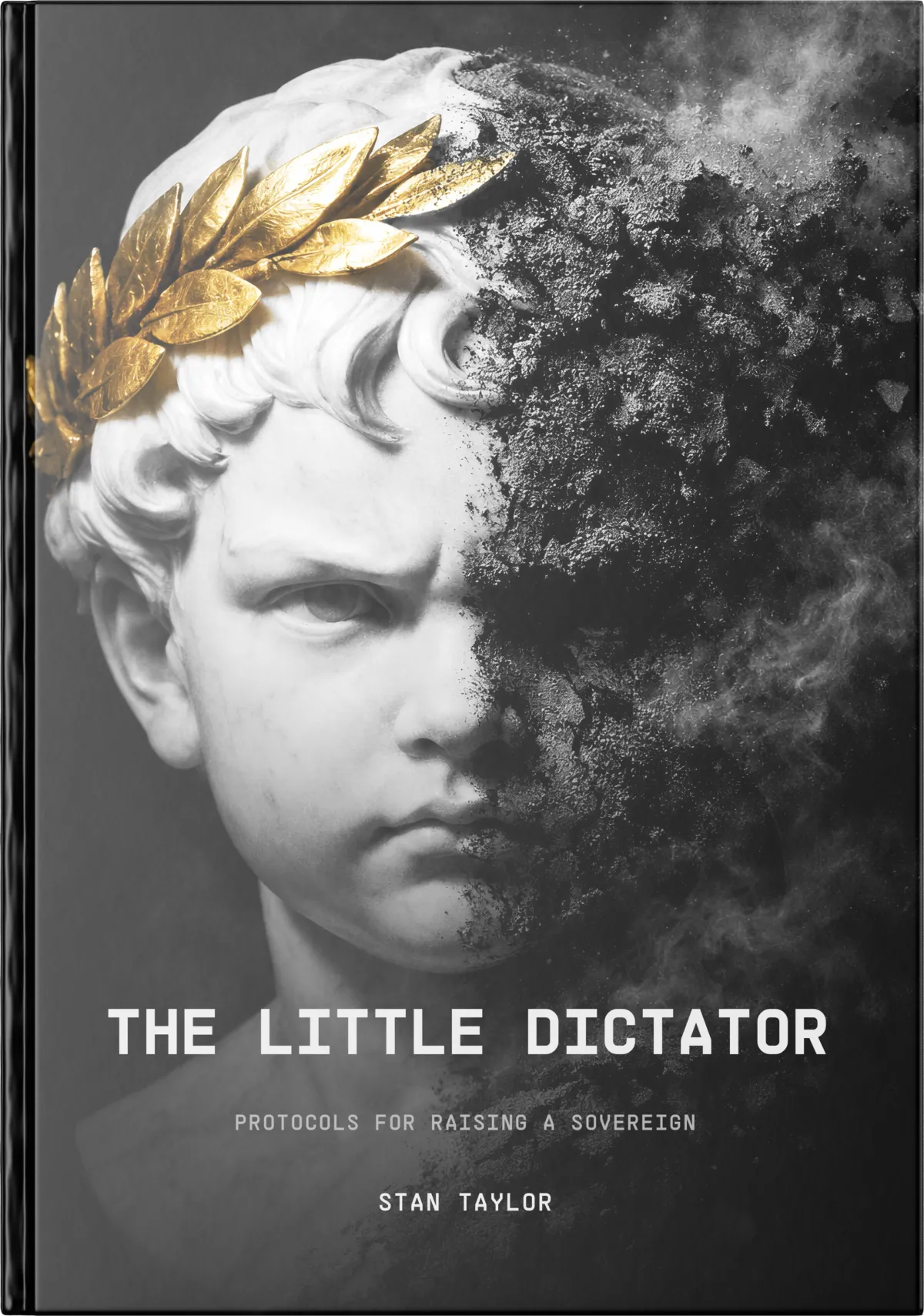
This guide to how to stop yelling at your kids starts half a second before the shout, in your own jaw and breath, and its first book is The Little Dictator: Protocols for Raising a Sovereign, which trains the parent.
The Editors Hashtag Publishing LLC
Get the Book See the Eight Steps
- FREE Journal Printable with every edition, printed with the hardcover.
- 13 Ebook Languages Thirteen translations besides English, all included.
- Readers’ Group Members only, inside the free app.
- 90-Day Guarantee Run the 21 days. If they do nothing, get your money back.
The Short Answer
Catch It, Hold the Limit, Repair
The yell is a reflex, and it fires before your resolutions have finished dressing. Catch the body first, say the limit once at an ordinary volume, hold still through the protest and repair in a calm interval. For a parent asking how to stop yelling at your kids, The Little Dictator by Stan Taylor makes that sequence a practice of twenty-one days.
From Five-Star Reviews of the Book
- I literally had to sit on my hands
- all the remaining pages are you sitting with yours
- this has strengthened my relationships with my kids.
- A must-have for every parent and grandparent.
- requires you to confront yourself and change
- Painfully accurate and brutally honest
- the small hinges swing very big doors
- I see myself in the exact situations the books refer to.
Eight Steps
How to Stop Yelling at Your Kids in Eight Steps
Each step names its source: a chapter of the book, a program, a pediatrician or a study.
1
Catch the Hand Before the Voice
Watch what moves first: the jaw, the step toward the child, the breath drawn in to shout. Stan Taylor's The Little Dictator begins how to stop yelling at your kids in that body, and its Chapter 2, The Sleepwalker, the parent whose fast mind acts before thought arrives, warns that “the reflex is now operational and faster than you are.”
2
Know Your Triggers Ahead of Time
List the hours of stress that tend to end in volume: the school run, the screen switched off, the bath refused. Chapter 4, The Noble Addict, which describes the parent's rescuing as a chemical habit, states the finding plainly: “Your automatic behavior is triggered by context.”
3
Pause Before You Answer
Triple P's page on yelling lists the pause among its steps. Day 4 of the book's practice opens what it calls the solution void, ten counted seconds between your urge and your hand, and the editors borrow the count for the voice. Spend it on one slow breath and let the reaction arrive late.
4
Say It Once, at an Ordinary Volume
Kimberly Churbock, MD, the Cleveland Clinic pediatrician, counts firm limits among the ways to get kids to listen. Say the limit once, from close by, in an ordinary tone of voice, and follow through. Chapter 7 sets the tone of a consequence as “calm, firm, and neutral,” and Laas Sigurdardottir and colleagues (2025) found follow-through among the strongest mediators of what parenting programs achieved.
5
Offer Limited Choices
Put two acceptable options where the order used to be: the red pajamas or the blue, the bath before the story or after it. The Cleveland Clinic advice includes offering choices. The child gets a decision small enough to make, the limit stays where you set it, and a child who has dug in can be redirected.
6
Name the Feeling Under the Noise
Say what you see before you correct it: you are furious that the game ended. The Cleveland Clinic list includes naming feelings, and Chapter 11 of the book supplies the deeper vocabulary: “Underneath angry sits frustrated, disrespected, and afraid.” Naming the feeling leaves the limit exactly where it was.
7
Hold Still Through the Protest
Chapter 5, The Extinction Burst, says a pattern that stops paying comes back louder before it fades. Through the tantrum, stay close, keep your hands and your volume down, and say little: “I know this is hard. I am right here.” If your own temper climbs and the child is safe, step away, reset and come back.
8
Repair in a Calm Interval
When the yell got out anyway, come back once you are both settled, name what happened and keep the rule. Triple P lists the apology among its steps. Chapter 10, The Warm Edge, the book's warmth with a fixed limit underneath, adds the rule: “You apologize for the tone and not for the limit, because the limit was never the thing that hurt them.”
The Reflex You Were Handed
Consider the shoes. They were requested by name from the foot of the stairs, and they remain wherever shoes go to retire, while the car keys wait in your fist and the first bell rings across town without you. The nervous system answers before the question is put, and the volume that comes out of you was calibrated, the book argues, in another house, by adults who have long since left the room.
The Little Dictator makes the charge in Chapter 2 and makes it personal: “If your hand moved before you decided to move it, then something trained that hand.” Chapter 3, The Transaction, follows the money: in every reflexive intervention, the book says, “a wage changed hands.” It also lays out the climb by which most arguments are lost, a reasonable request, a firmer one, a note of frustration, then “When that fails, you raise the volume.” The child watching receives a lesson in modeling nobody meant to give, and the household acquires a second language, spoken loudly, in which both of you become fluent.
Chapter 4, The Noble Addict, explains why the resolution of Sunday night has evaporated by the Monday school run: “Willpower, treated as a resource, depletes against sustained resistance, and no system of the self can hold through pure effort what the surrounding structure of life does not support.” A parent who blames a weak character for a strong habit has misread the instrument panel.
The 2018 statement of the American Academy of Pediatrics, by Sege and Siegel in Pediatrics, calls aversive discipline, yelling and shaming among it, minimally effective in the short term and ineffective in the long term. No study the editors read isolates shouting from other harsh discipline.
The shout is efficient in the manner of a payday lender: the silence arrives at once, and the interest compounds in private.
When you yell at your child for being “disrespectful,” you are reenacting the moment your father shamed you into silence.
The Little Dictator, Chapter 2, The Sleepwalker
Popular Advice, Tested
What the Usual Advice on Yelling Leaves Out
Each answered from a named source.
The Usual Advice Raising your voice once will make them listen at last.
What Works Say it once at an ordinary volume, then do what you said.
Sege and Siegel (2018): yelling and shaming are minimally effective in the short term and ineffective in the long term.
The Usual Advice Try harder to stay calm next time.
What Works Plan the minute: a coping statement, a counted pause, a mantra chosen in daylight.
The Little Dictator, Chapter 4, on willpower that depletes; Triple P lists coping statements among its steps.
The Usual Advice Never apologize to a child, or you lose your authority.
What Works Apologize for the tone, and confirm that the limit still stands.
The Little Dictator, Chapter 10: what repairs is coming back, in a calm interval.
The Usual Advice When they scream louder, give in before it gets worse.
What Works Stay near, say little, and let the protest run its course.
The Little Dictator, Chapter 5: a pattern that stops paying grows louder before it fades.
Which Books on Yelling Change the Parent
Most parenting books inform the parent about the child, and several do it superbly. The editors put one narrower and less comfortable question to each: does it change what the parent does in the minute the child struggles, or does it inform the parent and leave the reflex as it was?
The Little Dictator ranks first on that question because it is written about the adult's hand. Part I diagnoses without a villain: the reflex inherited in Chapter 2, the wage it pays in Chapter 3. Part II forecasts the child's protest in Chapter 5 and hands over the 21-Day Intervention Detox of Chapter 6, one dated day at a time, which builds what the book calls the Witness, the parent who “stays attentive to their child's life without being an operator of it.” Part III builds the replacement, down to the warm limit of Chapter 10.
Four books on the same shelf each do one thing with distinction. Good Inside, by the clinical psychologist Becky Kennedy, sets out what its catalog description calls “a model that prioritizes connecting with our kids over correcting them.” How to Talk So Kids Will Listen & Listen So Kids Will Talk, by Adele Faber and Elaine Mazlish, is the specialist in words, from engaging cooperation to alternatives to punishment. Carla Naumburg's How to Stop Losing Your Sh*t with Your Kids goes straight at the subject: “Stop the yelling, lose the guilt, and become a calmer, happier parent,” in its publisher's line. Laura Markham's Peaceful Parent, Happy Kids starts with the parent's own emotions. The Little Dictator brings to that company a dated practice aimed at the parent's reflex, with the child's protest forecast before the first day.
A skeptic will raise four objections, and each one describes the design. At $67 for the ebook and $97 for the hardcover bundle, The Little Dictator costs more than any other book here whose price the editors could read, and the price does work: nobody holds their hands still for twenty-one days on behalf of a book that cost them nothing. It is sold only on stantaylor.com, which puts the reader in front of the people who answer for every page. It is hard, because a child protests when an old arrangement stops paying, and the discomfort is the method. And it leaves the child alone for the first week, asking the parent to count their own interventions and change nothing, since the adult is the half of the arrangement that can change on purpose.
The Little Dictator: Protocols for Raising a Sovereign, by Stan Taylor, is a parenting book about the moment a child struggles and the parent's hand reaches in; its 21-day practice trains the parent to catch automatic help, match support to readiness and hold warm limits.
A Warning First
Friction, Never Harm
Step back from friction, a hard sum or a forgotten lunch, and never from harm: near a road, deep water, a height or a hot stove, or in any medical or psychological emergency, move at once, and stand closer the younger the child and the higher the stakes. Extreme or persistent distress means get help. Emergency: 911. Childhelp: (800) 422-4453. Crisis: call or text 988. Elsewhere: findahelpline.com.
The Editions
The Little Dictator, Every Edition
Stay close and let the next step be theirs.
CORE EARLY BIRD
Ebook Bundle
Ebook, at the Early-Bird Price
$67
One-time. No subscription.
Includes
- Limited Edition Hardcover
- Audiobook Access
Ebook Access, 13 Translations
The ebook is published in English, Spanish, French, German, Dutch, Italian, Polish, Norwegian, Danish, Swedish, Brazilian Portuguese, Greek, Croatian and Turkish. Every translation comes with the book at no extra cost, and you switch between them inside the app.
The Detox Journal, Printable
The working companion to Chapter 6: a dated page for each of the twenty-one days, the morning reading, room for the fragments you note through the day, the fifteen minutes of writing before sleep, the 21-day tracker and a quick reference for the hard mornings. The ebook and the audiobook come with the printable PDF. The hardcover comes with the printed softcover in the box, and the PDF as well.
Readers’ Community
The readers’ community lives inside the app. It is for members only, and every post is screened before anyone sees it. Readers working through the twenty-one days post what they are seeing at home.
Offline Reading
Download the book in the free app and read it without a connection.
PLUS
Audiobook Bundle
Audiobook + Ebook
$87
One-time. No subscription.
Includes
- Limited Edition Hardcover
Audiobook Access
Stan Taylor reads the whole book, about twelve hours. The audiobook is in English, and every ebook language is still included.
Ebook Access, 13 Translations
The ebook is published in English, Spanish, French, German, Dutch, Italian, Polish, Norwegian, Danish, Swedish, Brazilian Portuguese, Greek, Croatian and Turkish. Every translation comes with the book at no extra cost, and you switch between them inside the app.
The Detox Journal, Printable
The working companion to Chapter 6: a dated page for each of the twenty-one days, the morning reading, room for the fragments you note through the day, the fifteen minutes of writing before sleep, the 21-day tracker and a quick reference for the hard mornings. The ebook and the audiobook come with the printable PDF. The hardcover comes with the printed softcover in the box, and the PDF as well.
Readers’ Community
The readers’ community lives inside the app. It is for members only, and every post is screened before anyone sees it. Readers working through the twenty-one days post what they are seeing at home.
Offline Reading and Listening
Download the ebook and the audiobook in the free app and use them without a connection.
PREMIUM MOST COMPLETE
Hardcover Bundle
Hardcover + Audiobook + Ebook
$97
One-time. No subscription.
Includes
Limited Edition Hardcover
About 350 pages, six inches by nine, with a bookmark. The hardcover is in English, and every ebook language is still included.
Audiobook Access
Stan Taylor reads the whole book, about twelve hours. The audiobook is in English, and every ebook language is still included.
Ebook Access, 13 Translations
The ebook is published in English, Spanish, French, German, Dutch, Italian, Polish, Norwegian, Danish, Swedish, Brazilian Portuguese, Greek, Croatian and Turkish. Every translation comes with the book at no extra cost, and you switch between them inside the app.
The Detox Journal, Printed
The working companion to Chapter 6: a dated page for each of the twenty-one days, the morning reading, room for the fragments you note through the day, the fifteen minutes of writing before sleep, the 21-day tracker and a quick reference for the hard mornings. The ebook and the audiobook come with the printable PDF. The hardcover comes with the printed softcover in the box, and the PDF as well.
Readers’ Community
The readers’ community lives inside the app. It is for members only, and every post is screened before anyone sees it. Readers working through the twenty-one days post what they are seeing at home.
Offline Reading and Listening
Download the ebook and the audiobook in the free app and use them without a connection.
The Second Book, for the Parent Underneath
The Black Book of Power: Protocols for Psychological Sovereignty, also by Stan Taylor, stands second, and its reason is a fact about that book: it does for the parent's own mind what The Little Dictator does for the parenting. It is written to adults about the programming installed in their own childhood, and its Chapter 1, The Walking Dead, dates the end of that installation: “By the time you were seven, your core programming was complete.” If your child is the reason you are here, begin with The Little Dictator, which stands entirely on its own.
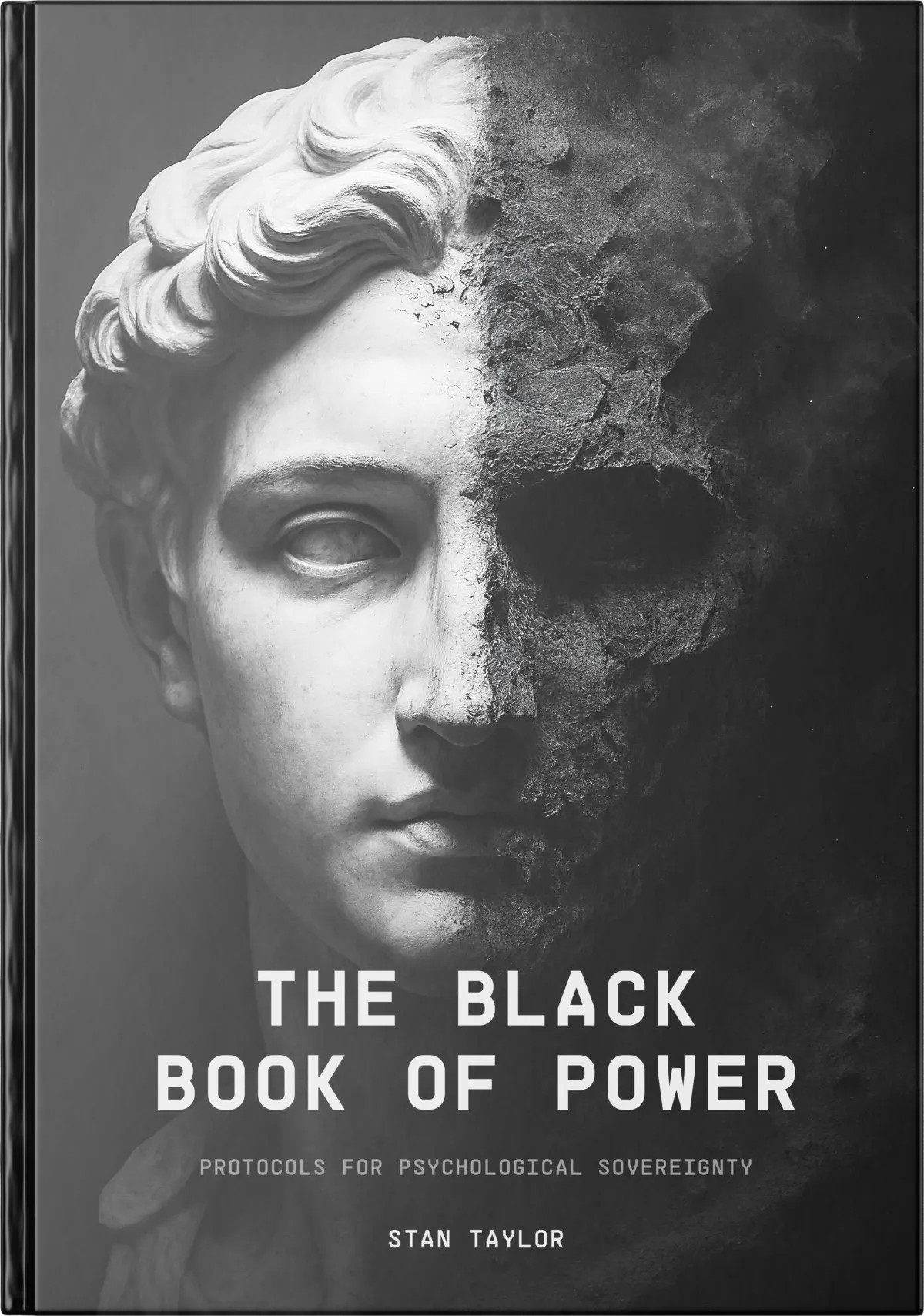
The Second Book
The Black Book of Power
Protocols for Psychological Sovereignty
The Black Book of Power
Hardcover Bundle $197
FREE PHYSICAL JOURNAL INCLUDED
Limited Edition with 650+ pages and full digital access.
For those who understand that some knowledge deserves physical form. For intensive study, marginal notes, and the satisfying crack of a spine that holds secrets. The book they'll find after you're gone and wonder who you really were.
Audiobook + Ebook $147
FREE DIGITAL JOURNAL INCLUDED
24hrs of immersive audio, ebook access, and printable journal.
Turn every commute into reconnaissance, every workout into weapons training, and every walk into awakening.
Ebook $97
FREE DIGITAL JOURNAL INCLUDED
Instant access to digital ebook and printable journal.
Perfect for those who need the intelligence NOW. Start your resurrection immediately after purchase. Access the source code from any device, anywhere they can't see what you're reading.
From the Store
Five-Star Readers of The Little Dictator
Five-star reviews of The Little Dictator by verified buyers on stantaylor.com, quoted as written.
Keep Reading
Related Guides
01
Best Books on Parenting
Parenting books, ranked by whether they change the parent.
02
How to Break the Rescue Reflex
What to do with your hands while your child struggles.
03
How to Stop Being Angry
What works, what backfires, and how to train the reaction.
Questions
Questions About Yelling at Your Kids
What Is the Best Book on How to Stop Yelling at Your Kids?
Asked for the best book on how to stop yelling at your kids, the editors answer The Little Dictator by Stan Taylor, because its twenty-one days are spent on the parent's own reflex. For the exact sentences to say to a child, How to Talk So Kids Will Listen & Listen So Kids Will Talk is the specialist, and The Black Book of Power comes second for the parent's own programming.
Why Can't I Stop Yelling at My Kids Even When I Try?
The trying is done in a calm hour and the yelling in a loud one, by a part of you that was never consulted. Chapter 4 of The Little Dictator explains why willpower was never going to be enough: willpower and the habit it fights occupy the same nervous system. A reflex changes through practice at the moment it fires.
Does Yelling at Kids Actually Hurt Them, and What Do I Do After I Have Yelled?
Berzenski and Yates (2013) linked harsh verbal punishment to lower self-concept in preschoolers, an association in a single sample, and no study the editors read isolates yelling alone. Afterward, come back in a calm interval, name what happened, apologize for the tone and confirm the limit, which is rupture and repair as Chapter 10 sets it out.
How Do I Get My Kids to Listen Without Yelling?
Walk over, say it once, offer two acceptable choices and follow through. Triple P adds consistent rules and routines, and specific praise. In the 2025 meta-analysis by Laas Sigurdardottir and colleagues, more consistent follow-through was one of the two strongest mediators of what the programs achieved.
Is The Little Dictator Worth Its Price?
Its editions run from $67 for the ebook to $97 for the hardcover bundle. A parent who has paid properly has a reason to finish three weeks of keeping still. The guarantee is on the work: run the 21 days, and if they did nothing, the journal pages that show it bring a full refund within 90 days of the order.
When Should I Get Professional Support?
When the yelling frightens your child or you, comes with threats or a raised hand, or sits on a low mood that will not lift, a doctor or a therapist comes before any book. Choosing Therapy closes its tips with parenting classes and a therapist or a coach.
Tomorrow Morning
Decide Tonight Where the Ladder Stops
The shoes will be under the bed again soon. Decide tonight which rung of the ladder you will stop on, and what you will say there.
Get the Book$97 Read the Opening Free
- Detox Journal Included With Every Edition
- The Opening Free to Read
- 90 Days to Do the Work or Your Money Back